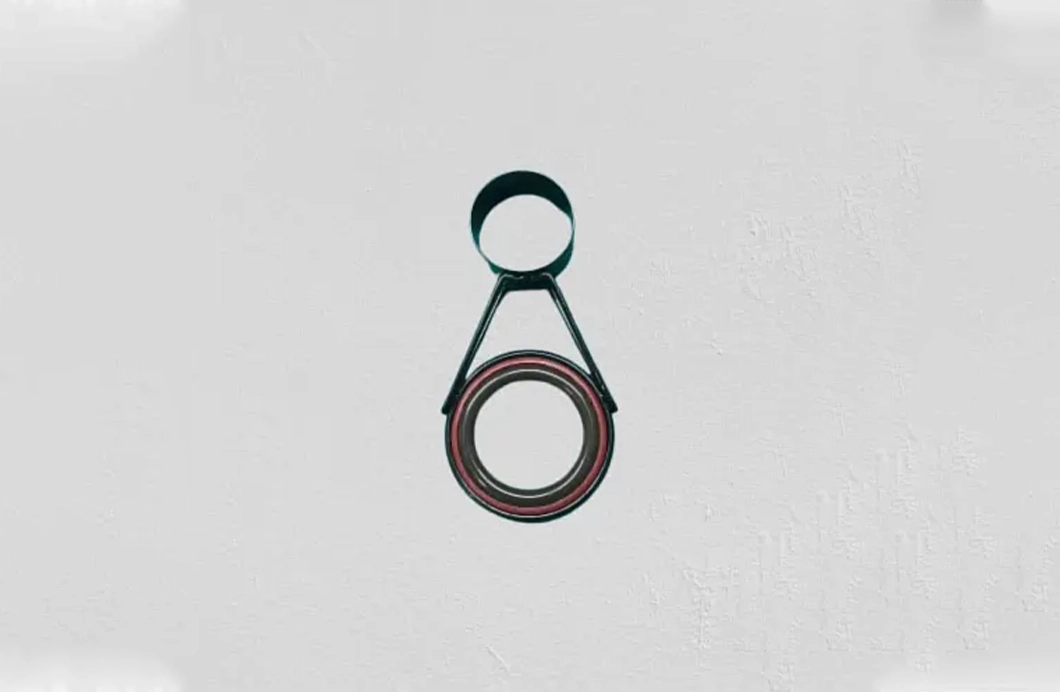
The guides on your fishing rod play a key role in the performance of your equipment. Although they may seem sturdy and durable at first glance, they wear out over time and can cause problems that you may not notice right away. Regularly checking your guides can prevent unexpected failures and extend the life of your rod. We have a sale on rod guides in our offer. You can choose between Telescope Rod Guide or Rod Tip Guide. Find the one that suits your needs today!
Here are the main reasons why you should check them regularly.
1. Invisible Wear of Ceramic Inserts
Problem: Ceramic inserts in water lines look smooth, but micro-scratches from contact with nylon gradually reduce their effectiveness.
Consequences:
Increased friction → shorter throw
Nylon damage → weakening of nylon strength
✅ Decision: Check the guide with a bright light – if you see a grainy surface, it's time for a replacement.
Frequency of water problems
Type of problem
Frequency (%)
The main causes
Wear of ceramic inserts
45%
Friction with nylon
Corrosion of metal parts
30%
Exposure to salt water
Frame deformation
15%
Big catches
Release of glue
7%
Age and weather influences
Other problems
3%
Mechanical damage
Note: Percentages are indicative and based on average fishermans' experiences. Actual values may vary depending on conditions of use and quality of equipment.
2. Metal Frame Corrosion (Especially in Sea Fishing)
Problem: The metal parts of the guide corrode from salt and moisture, even if you regularly wash them in fresh water after use.
Consequences:
Rust can cause the frame to break if subjected to a strong impact.
Sharp edges from corrosion they cut nylon
✅ Decision: After fishing in the sea, rinse the rod and guides with fresh water. and dry them.
3. Deformation of the Frame due to Pressure
Problem: If you often catch big fish, the guides can become bent from the constant strain.
Consequences:
Uneven load on the rod → increased risk of fracture
Unnatural bending of the nylon → loss of sensitivity
✅ Decision: Check the alignment of the guides – they should all be in perfect line.
4. Glue Release (Imperceptible Over Time)
Problem: The adhesive that holds the guide to the rod can weaken from heat, moisture, and mechanical stress.
Consequences:
The guide moves → throwing accuracy is lost
If it releases completely, it can damage the rod
✅ Decision: Check the tightness of the connection periodically. by gentle pulling.
5. Nylon Snagging – An Early Sign of a Problem
Problem: If the line starts to “jump” through the guide, it is a sign that there is:
Crack in ceramics
Irregularities in the frame
Consequences:
Reduced throwing distance i.e. throw out
Nylon wear in certain places
✅ Decision: Do a pull test – if you feel resistance, the guide is the problem.
How to Check Guides? – A Simple Test
Visual inspection – look for scratches, corrosion, cracks.
Finger test – run your finger along the inside of the guide to feel for any bumps.
Pull the nylon – if it's not smooth, it's time to replace it.
Conclusion
Rod guides are not a “set it and forget it” component. Hidden problems can cause:
Reducing throwing distance
Nylon damage
Increased risk of rod breakage
Recommended maintenance intervals
Angler type
Frequency of checking
Specific conditions
Professional fishermen
Every 3 months
Intensive use
Regular fishermen
Every 6 months
Weekly outings
Casual fishermen
Once a year
Seasonal fishing
Freshwater fishing
Per year
Less loads
Sea fishing
Every 4 months
Aggressive salty environment
Recommendation: Check them at least once a year, and if you fish often – every 6 months. See how you can change the guide yourself at link.
You can find a large selection of fishing equipment in our store web shop!
Telescopic rods have thinner and more sensitive segments than one-piece models, which is why it is important to know how to properly replace the guides on a telescopic rod...


 EN
EN